
How to Get an EHCP for Your Child (Step-by-Step Guide for Parents)
If you’re trying to understand how to get an EHCP for your child, you’re not alone.
Many parents reach a point where they feel their child needs more support than school can provide — but aren’t sure how to start the process.
This guide explains the EHCP process step by step, including your rights under the law, so you can feel confident navigating the system and getting the right support in place.
What is an EHCP?
An Education, Health and Care Plan (EHCP) is a legally binding document that sets out your child’s needs and the support required to meet those needs.
EHCPs are issued under:
The Children and Families Act 2014
The SEND Code of Practice (2015)
Once finalised, the provision in an EHCP must be delivered by the local authority.
What Sections Are in an EHCP? (A–K Explained)
An EHCP is made up of several sections, each with a specific purpose:
Section A – Views, interests and aspirations of the child and family
Section B – Special educational needs
Section C – Health needs related to SEN
Section D – Social care needs related to SEN
Section E – Outcomes (what your child is working towards)
Section F – Special educational provision (this must be specific and enforceable)
Section G – Health provision
Section H1 & H2 – Social care provision
Section I – Placement (school or setting)
Section J – Personal budget (if applicable)
Section K – Advice and reports gathered during assessment
Sections B, E and F are particularly important, as they link needs → outcomes → provision.
Who Can Get an EHCP?
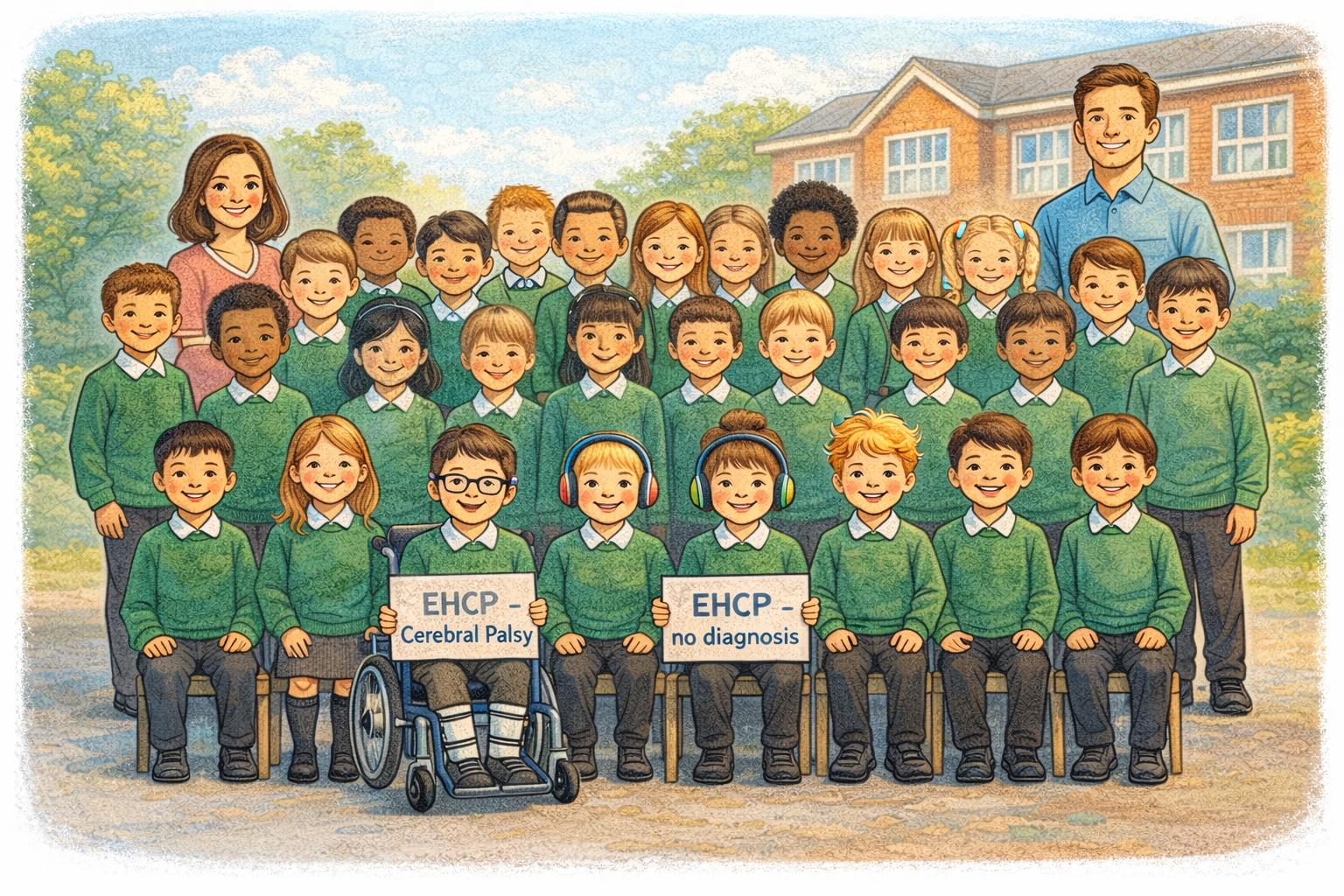
An EHCP is for children and young people (0–25) who need more support than is normally available in mainstream education.
You do not need:
a diagnosis
school agreement
a specific level of attainment
The legal test is whether your child may need special educational provision through an EHCP.
The EHCP Process Step by Step
Step 1: Request an EHC Needs Assessment
How to apply for an EHCP?
The first step in getting an EHCP is to request an Education, Health and Care (EHCNA) needs assessment from your local authority.
Parents and carers have the legal right to do this themselves under section 36 of the Children and Families Act 2014. You do not have to wait for the school to make the request for you.
When parents search for terms like how to apply for an EHCP, EHCP request letter template, or EHC needs assessment letter, this is the stage they are usually at.
Your request should clearly explain:
your child’s special educational needs
the difficulties they are experiencing in school and daily life
what support has already been tried
why you believe they may need provision through an EHCP
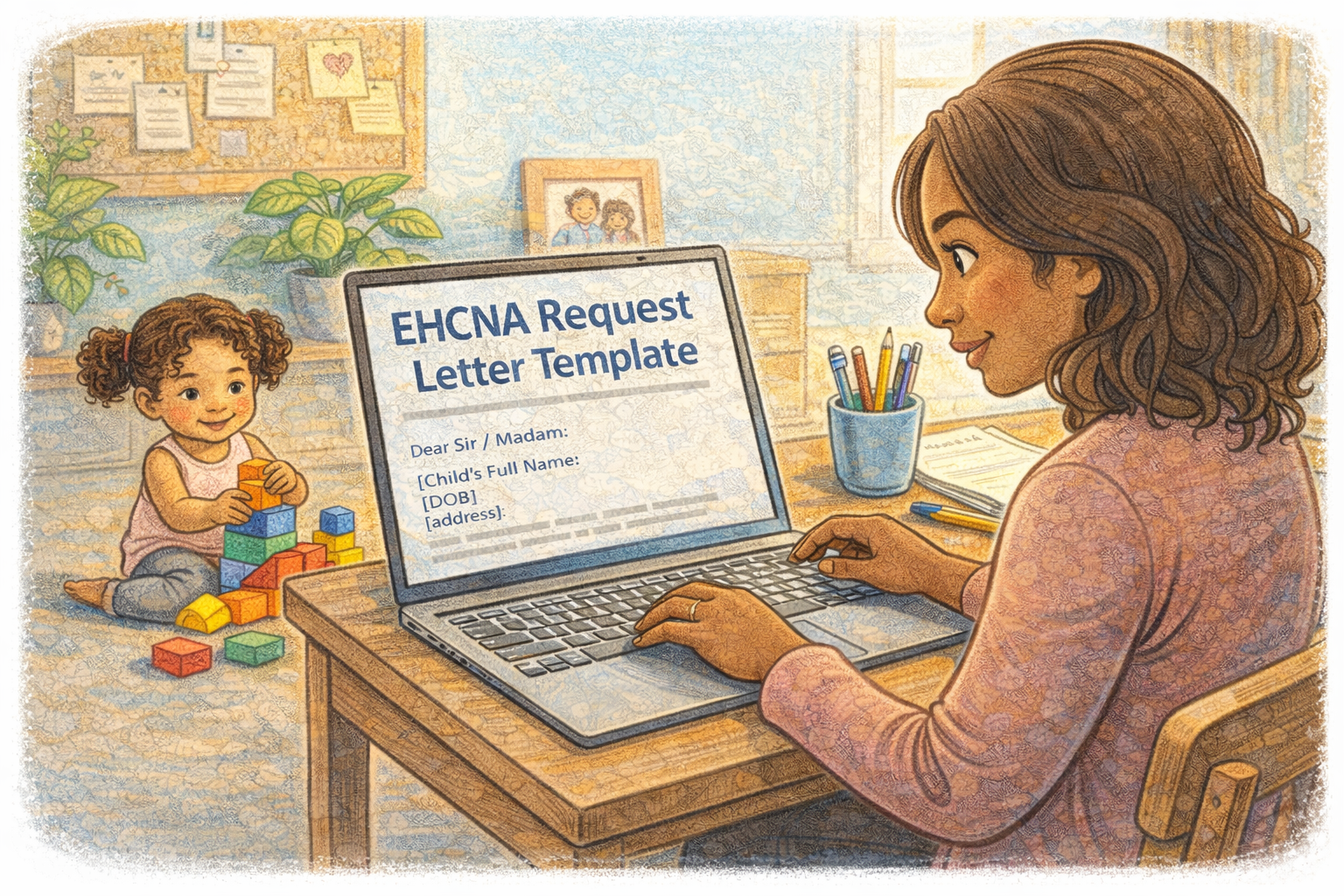
To make this easier, I’ve included a free EHC needs assessment request letter template for parents. This gives you a starting point if you are wondering how to word your request.
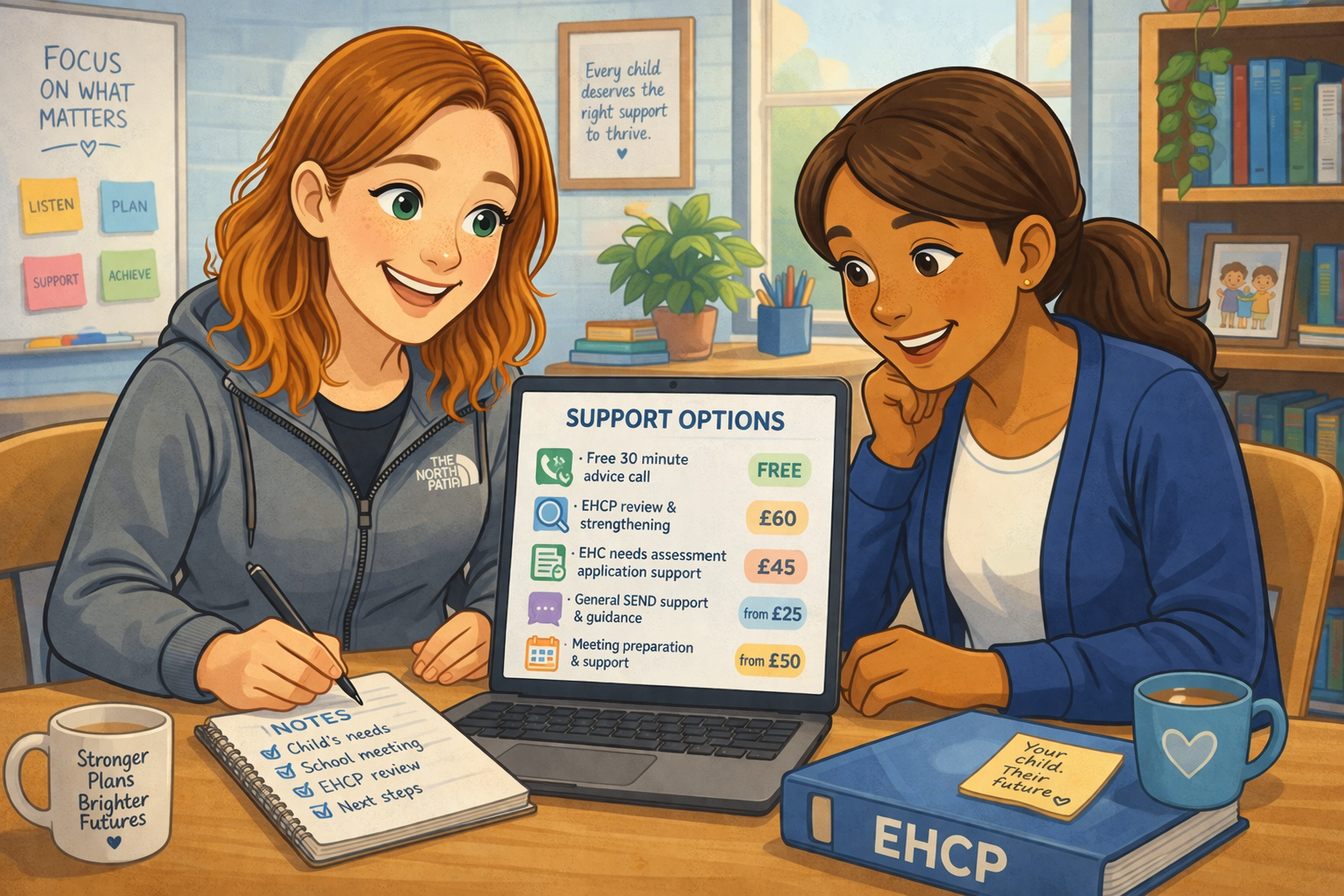
If you’d like support to strengthen your request, I offer EHC needs assessment application support for £45, helping you clearly evidence your child’s needs and present a strong, well-worded application.
What happens after you request an EHCP?
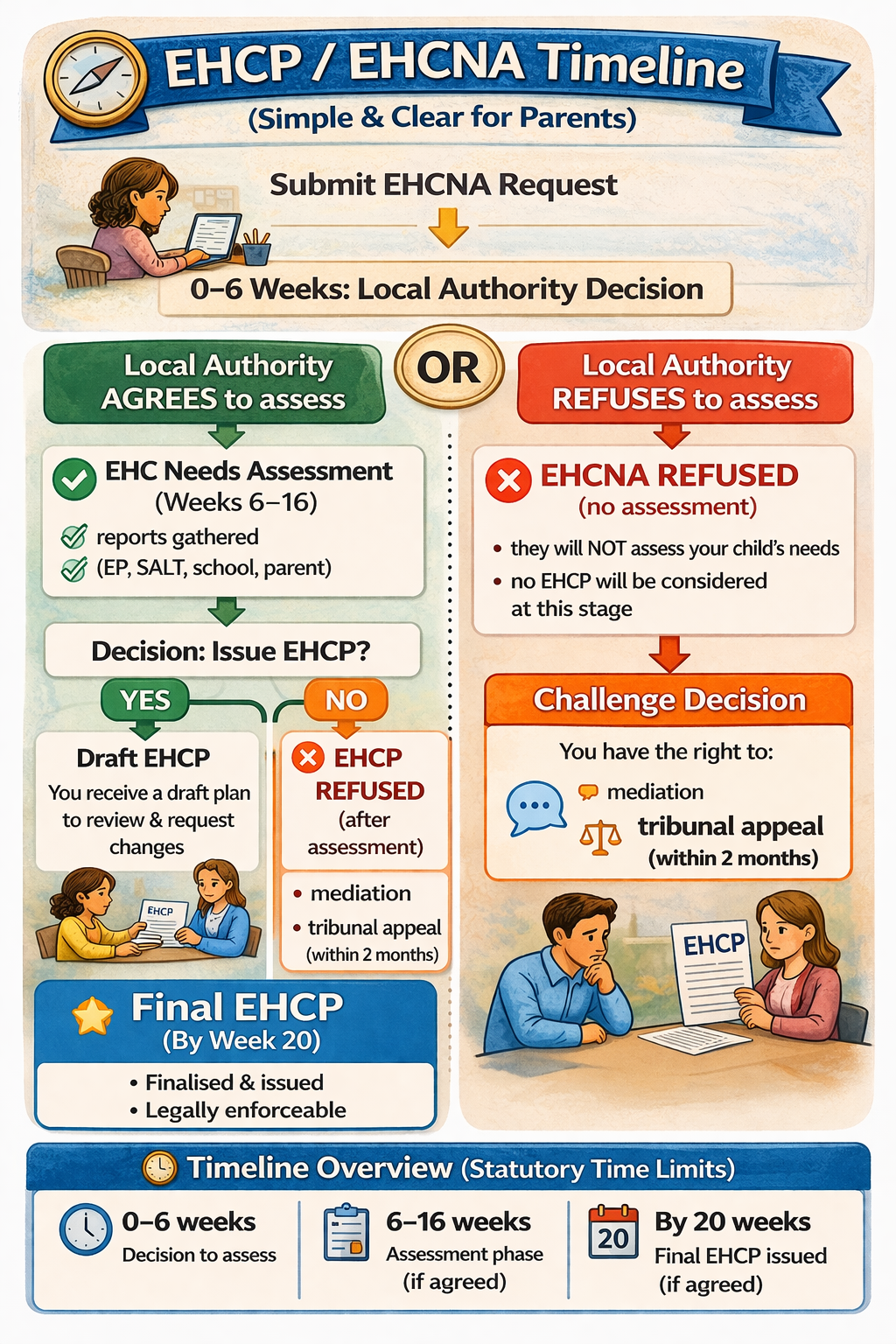
Once your EHC needs assessment request has been received, the local authority must decide within 6 weeks whether to carry out the assessment.
This duty and timescale sit within the framework of the Children and Families Act 2014 and the SEND Code of Practice.
At this stage, the local authority will look at:
information from school
parental views
professional evidence, where available
whether your child may have SEN and may require special educational provision through an EHCP
Step 2: Local Authority Decision (Within 6 Weeks)
Need some support? I’ve got you..
How long does an EHC needs assessment decision take?
The local authority must respond within 6 weeks of receiving your request.
Measured in calendar days so includes:
Bank Holidays
Weekends
School holidays and half terms.
What should I do if the Local Authority do not respond to my EHCNA in 6 weeks?
If you do not receive a response in time, or you need to chase the local authority, a clear follow-up letter can help. That is why I also include a free EHCP follow-up letter template on this page, so parents have practical wording they can use.
Who provides evidence for an EHCP?
If the local authority agrees to assess, they will gather advice and information from relevant professionals. This is often called the EHC needs assessment process.
Advice may be requested from:
parents or carers
school or setting
educational psychologist
speech and language therapist
occupational therapist
health professionals
social care, where relevant
This part of the EHCP process is important because it builds the evidence that will inform the plan.
Step 3: The Assessment Process
(weeks 6-16)
EHCP Evidence & Assessment Questions Parents
Ask Parents often ask about evidence, private assessments and diagnoses when applying for an EHCP — here are some of the most common questions answered.
-
Yes — parents can absolutely provide their own evidence as part of the EHC needs assessment process.
You do not have to rely solely on school or local authority reports. Your views and any additional evidence you provide are an important part of building a full picture of your child’s needs.
-
Yes — private reports can be used as evidence when applying for an EHCP or during the assessment process.
Parents often choose to obtain private assessments, such as:
Educational Psychologist reports
Speech and Language Therapy (SALT) assessments
Occupational Therapy (OT) reports
Autism or ADHD assessments
These reports can help clearly identify your child’s needs and the support required.
-
Local authorities must consider all relevant evidence, including privately obtained reports.
This is supported by:
SEND Code of Practice (2015)
Children and Families Act 2014
However, in practice, some local authorities may place more weight on their own commissioned reports.
This is why it’s important that any evidence — whether private or LA-provided — is:
clear
specific
linked to need and provision
-
Strong evidence will:
clearly describe your child’s needs
explain how those needs impact learning and daily life
recommend specific, quantified provision
This is particularly important when it comes to:
👉 Section B (needs)
👉 Section F (provision) -
No — a diagnosis is not required for an EHCP.
The legal test is based on your child’s needs and the provision required, not whether they have a formal diagnosis.
However, parents often ask whether private diagnoses or assessments must follow NHS standards or NICE guidelines.
In practice:
Local authorities may give more weight to reports that follow recognised clinical standards, such as NICE guidelines
Reports written by qualified professionals (e.g. HCPC-registered Educational Psychologists or regulated therapists) are generally considered more robust
The most important factor is that the report clearly identifies needs and recommends specific support
-
What matters more than a diagnosis?
For an EHCP, what matters most is:
clear evidence of your child’s needs
how those needs impact education and daily functioning
detailed, specific recommendations for support
A well-written report without a formal diagnosis can still be very strong evidence.
Don’t leave your EHCP request to chance
A strong, well-worded request can make a real difference to whether an assessment is agreed.
I offer EHC needs assessment application support for £45, helping you present clear evidence and strengthen your application.
Step 4: Draft EHCP (by week 16)
If the local authority decides that your child needs an EHCP, they will issue a draft Education, Health and Care Plan. This decision should be made by 16 weeks after the initial EHCNA request.
This is one of the most important parts of the process.
The draft EHCP should include the full range of sections, including:
Section A – views, interests and aspirations
Section B – special educational needs
Section C – health needs related to SEN
Section D – social care needs related to SEN
Section E – outcomes
Section F – special educational provision
Section G – health provision
Section H1 and H2 – social care provision
Section I – placement
Section J – personal budget
Section K – advice and reports
Draft EHCP Questions Parents Ask
Parents often search for answers at this stage, especially when they receive a draft plan and aren’t sure what to check or what to say.
-
When reviewing a draft EHCP, it’s important to check that:
all of your child’s needs are clearly described in Section B
provision in Section F is specific, detailed and quantified
outcomes in Section E link clearly to needs and provision
all professional reports are reflected accurately
This is your opportunity to request changes before the plan is finalised.
-
Section F should clearly set out all of the support your child requires.
This should include:
who will deliver the support
how often it will take place
how long sessions will last
how the support will meet identified needs
Vague wording such as “access to” or “opportunities for” is not enough.
-
Yes — you have the right to request amendments to the draft EHCP.
You can:
suggest changes to wording
ask for missing needs to be included
request more specific provision
provide additional evidence
This stage is crucial, as it is much harder to challenge once the plan is finalised.
-
When suggesting amendments, it’s important to:
link provision directly to identified needs
use clear, specific and measurable language
avoid vague or general statements
reference supporting evidence where possible
Strong wording makes the plan clearer and more enforceable.
-
If the draft EHCP:
doesn’t reflect your child’s needs
contains inaccurate information
or includes vague provision
You can request changes before it is finalised.
If issues remain in the final EHCP, you have the right to appeal.
-
These are the most important sections of the plan:
Section B – your child’s special educational needs
Section E – the outcomes they are working towards
Section F – the provision required to meet those needs
These sections should work together:
👉 needs → outcomes → provision -
You usually have 15 calendar days to:
review the draft
request changes
name a preferred school
It’s important to use this time carefully.
(Calendar days includes Bank holidays, weekends and school holidays).
-
No — you do not have to accept the draft as it is.
The draft stage is your opportunity to:
challenge wording
request changes
ensure the plan is accurate
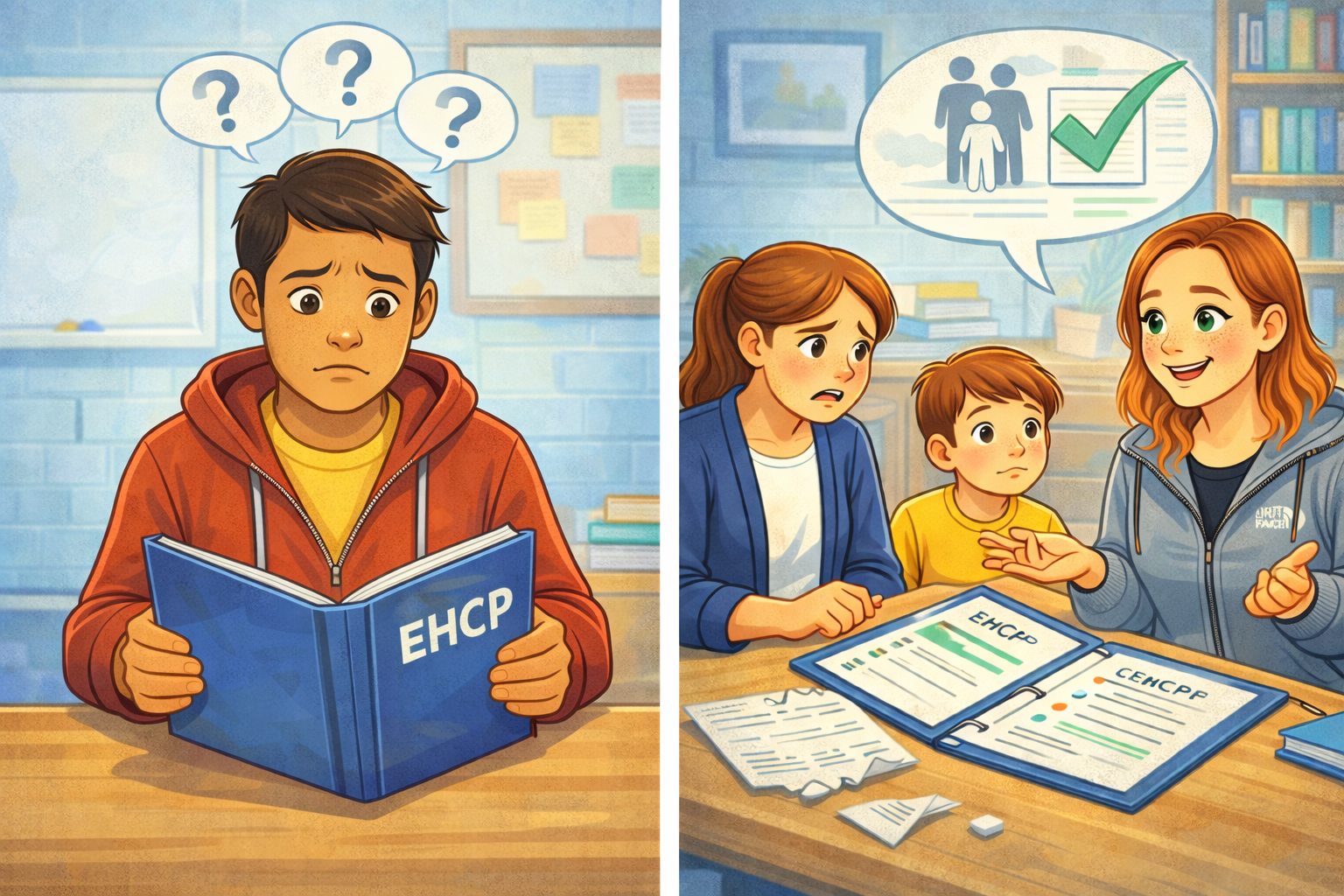
Need help reviewing your draft EHCP?
This stage can feel overwhelming, especially when you’re trying to understand legal wording and ensure everything is correct.
I offer EHCP review and strengthening support (£60), helping you:
identify gaps in Sections B and F
improve wording so provision is clear and enforceable
ensure the plan reflects your child’s needs
Step 5: Final EHCP (Within 20 Weeks)
The final EHCP should be issued within 20 weeks of the original request for assessment.
Once finalised, the special educational provision in Section F becomes legally enforceable. This means the local authority is responsible for ensuring that provision is delivered.
The legal basis for EHCPs comes from the Children and Families Act 2014, and the process is guided by the SEND Code of Practice 2015.
If you’re unsure whether your EHCP is strong enough, or whether provision is being delivered as it should be, I can help review and guide next steps.
-
Once the final EHCP is issued, the local authority has a legal duty to ensure that the provision in Section F is delivered.
This means:
support should begin as soon as possible
the school or setting must follow what is written in the plan
provision should match what is specified (not a reduced version)
-
Yes — once the EHCP is finalised, you have the right to appeal if you disagree with:
Section B (needs)
Section F (provision)
Section I (placement)
You can:
request mediation
appeal to the SEND Tribunal
👉 You usually have 2 months from the date of the final EHCP.
-
If provision in Section F is not being put in place:
the local authority remains legally responsible
you can raise concerns with the school and local authority
you may need to escalate if support is not implemented
Even if the school is delivering the provision, the legal duty sits with the local authority.
-
Yes — EHCPs must be reviewed regularly:
at least once every 12 months (annual review)
more frequently for younger children where needed
This ensures the plan continues to reflect your child’s needs.
-
Yes — changes can be made through:
the annual review process
interim/emergency reviews (in some situations)
If needs change, the EHCP should be updated accordingly.